
The Rise of Personalised Benefits in 2026
A 24-year-old graduate and a 52-year-old working parent may not value the same benefits package. Yet many organisations still offer employee benefits as if their workforce has identical priorities.
As Generation Alpha begins to enter the world of work over the coming years, employers face a growing challenge: how do you create a benefits strategy that works for five generations at once? For some employees, flexibility is the most valuable benefit. For others, it's pension support, financial wellbeing, healthcare or family-focused benefits. A Generation Z employee may place greater value on wellbeing support, flexibility and an employer whose values align with their own, while a Generation X employee may be balancing career progression with caring responsibilities and looking for a very different type of support.
Of course, not everyone fits neatly into a generational stereotype. People are individuals, and that's exactly the point.
The rise of personalised and modular benefits is one of the clearest employee benefits trends for 2026. Employees increasingly expect choice. They want benefits that reflect their stage of life, their priorities and the way they work. The organisations attracting and retaining the best talent won't necessarily be those spending the most on benefits. They'll be the ones designing benefits programmes that are flexible, inclusive and relevant to the people they employ.
If your benefits strategy hasn't been reviewed recently, now could be the time to ask whether it's meeting the needs of the workforce you have today - and the workforce you'll have tomorrow. We help employers review, benchmark and redesign their employee benefits programmes to ensure they're delivering real value to their workforce. Get in touch at hello@theinkgroup.co.uk to book a discovery call today.
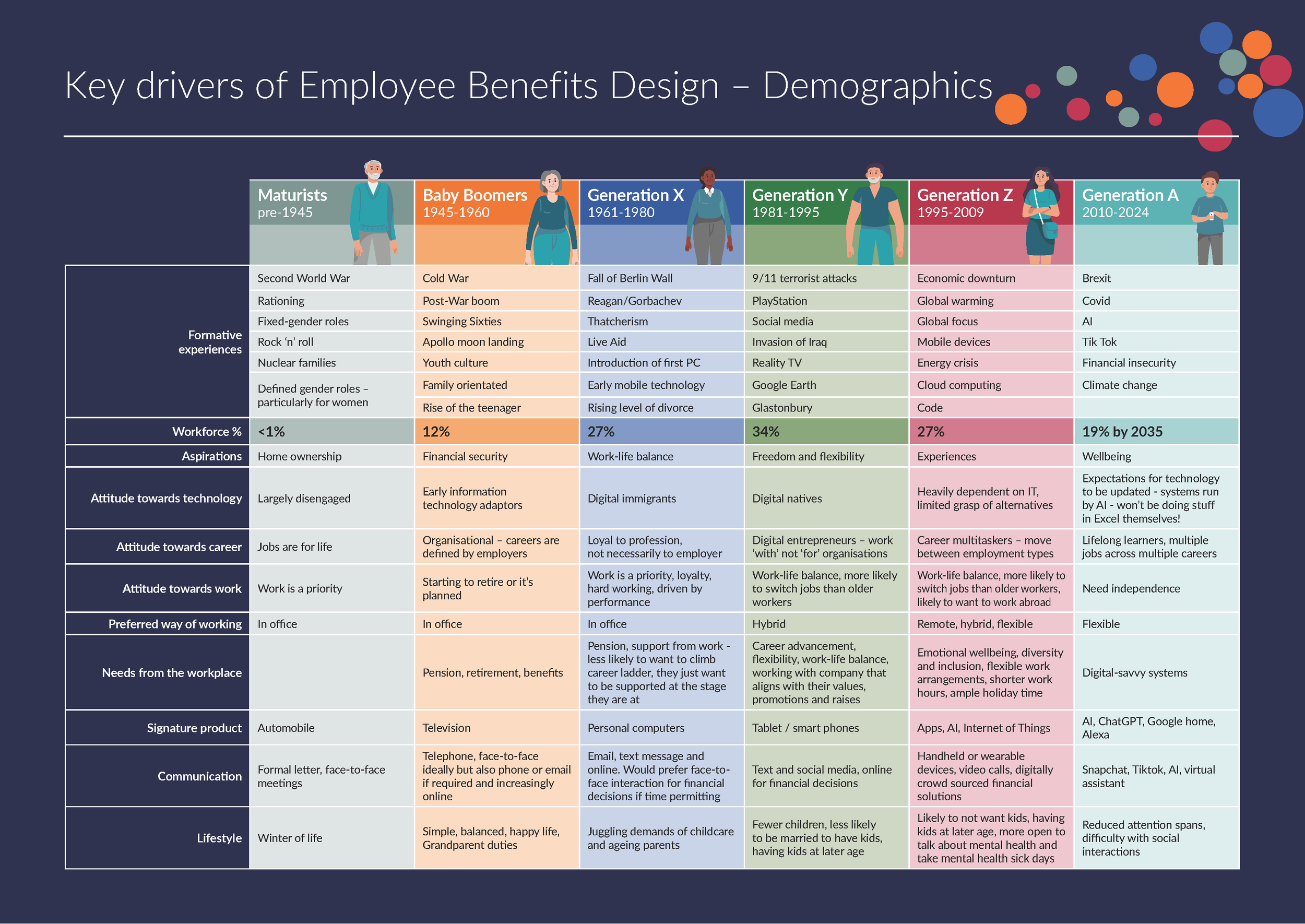
Key Drivers of Benefits Design - Generations & Demographics